ContentOps
Content management systems are most effective when supported by core capabilities and best practices for publishing, governance, integration, accessibility, and continuous improvement.
CMS Tools
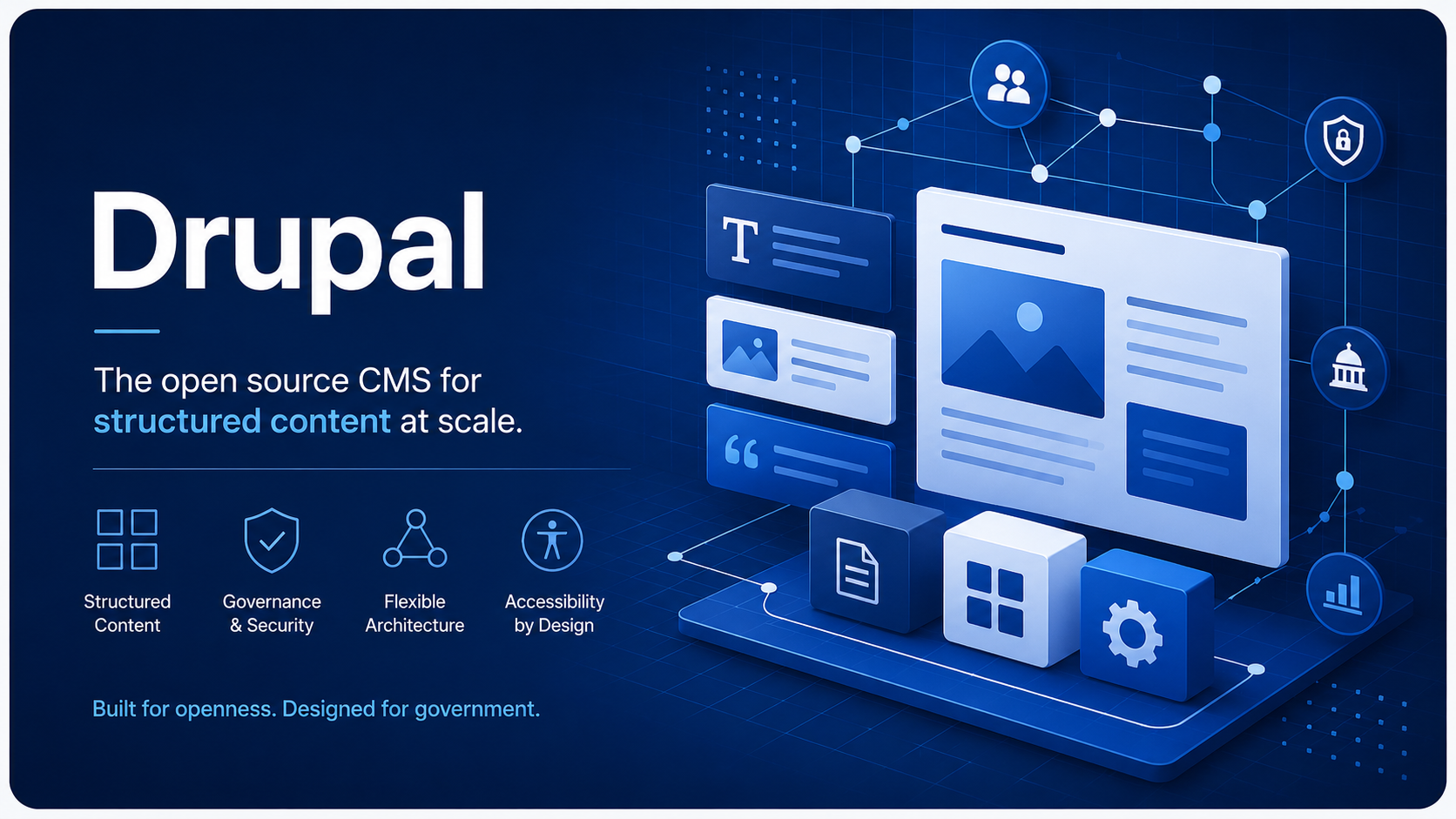
Drupal
Drupal is one of the most visibly adopted CMS in government/public-sector publishing.
- accessibility support
- governance flexibility
- multilingual support
- structured content
- open-source compliance advantages
- USA.gov
- Drupal for Government
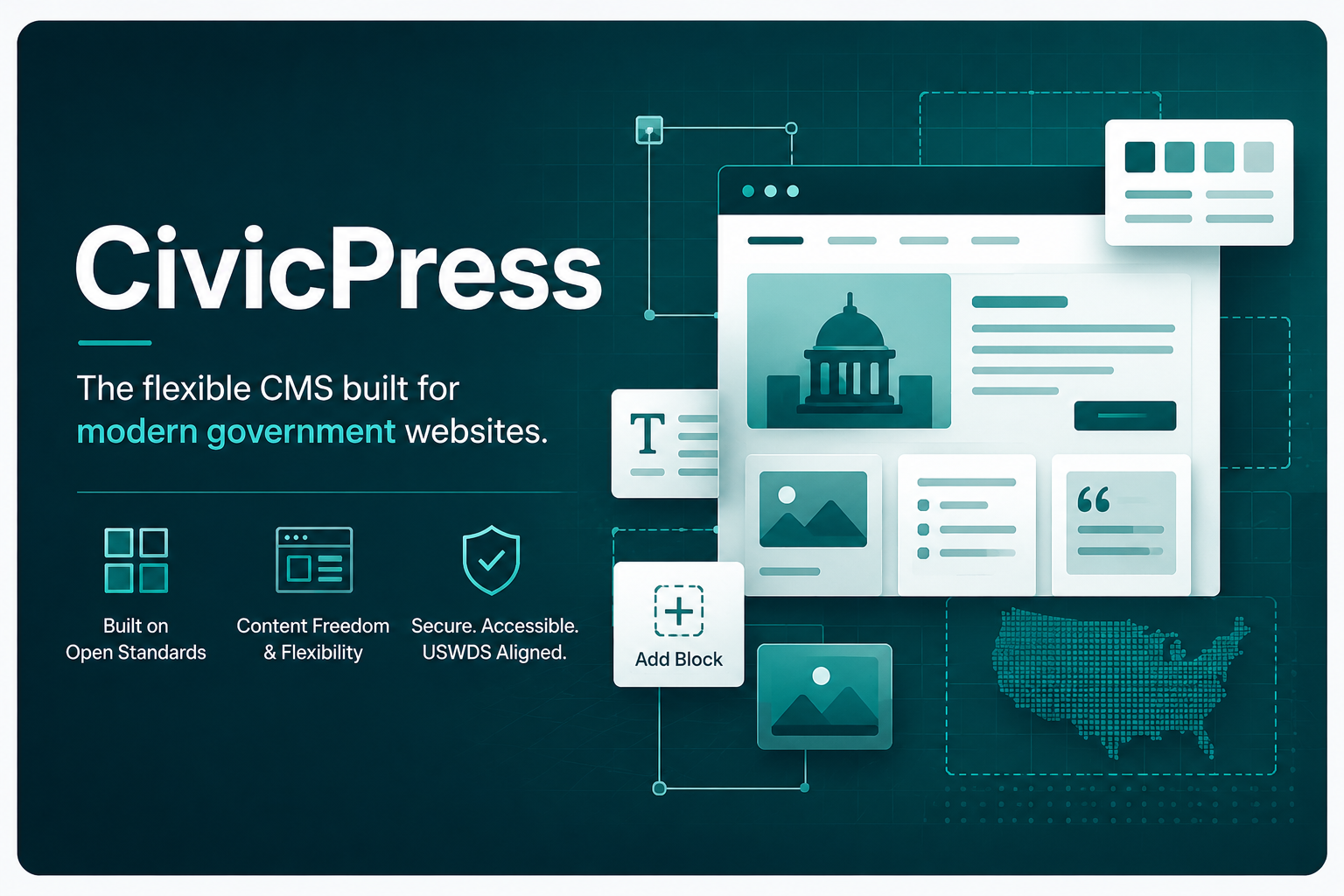
CivicPress
CivicPress is associated with modernization-oriented publishing approaches supporting digital services, NASA.gov modernization support initiatives, and USWDS-aligned implementation practices.
- standards-based authoring
- reusable content
- block-based usability
- modernization-oriented publishing
- USWDS-aligned approaches
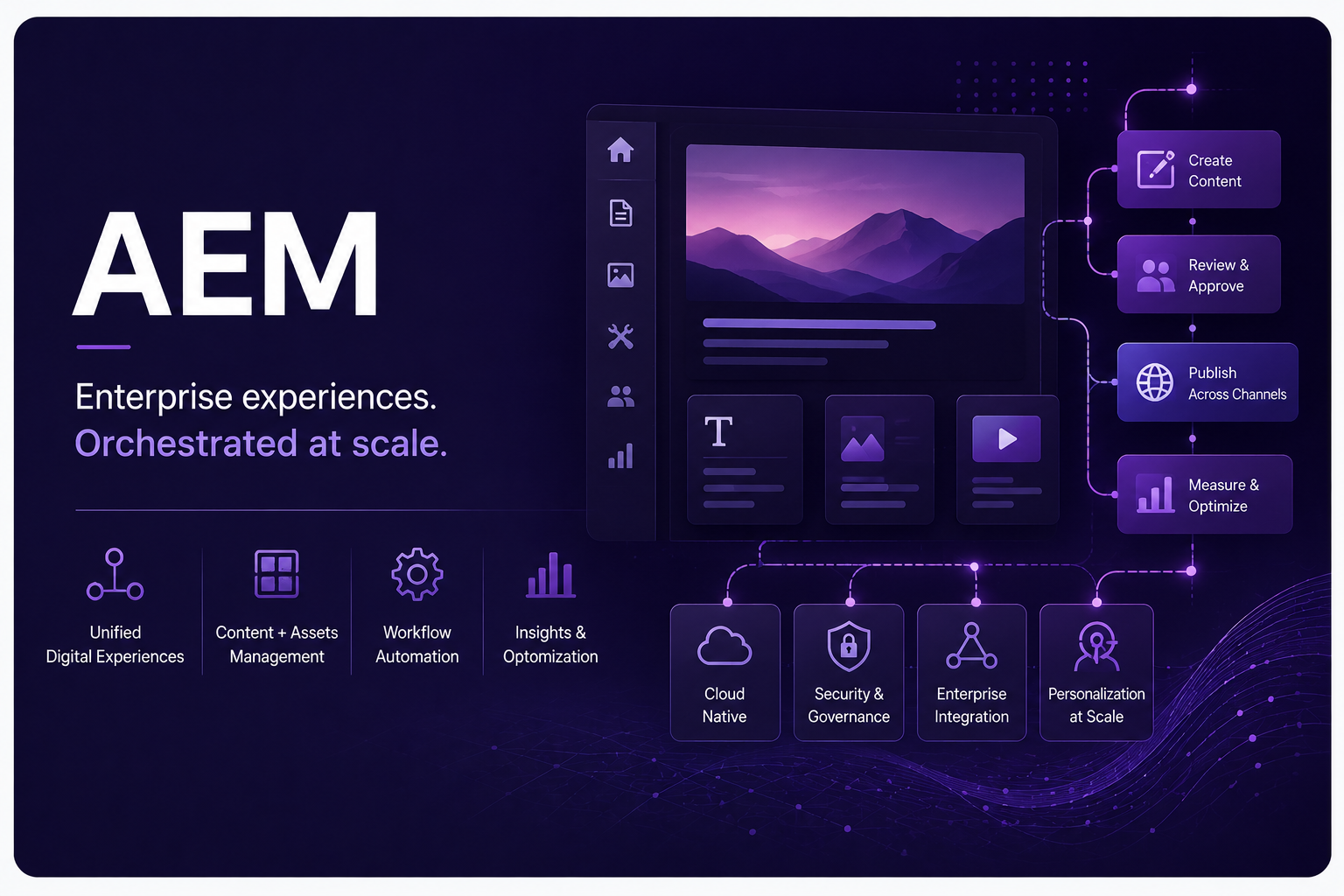
Adobe Experience Manager (AEM)
Adobe Experience Manager (AEM) and Adobe Digital Government publicly references work with:
- CDC
- HHS
- GSA-related modernization efforts
- state and local agencies
- approval workflows
- scalable content delivery
- digital asset management (DAM)
- Adobe Analytics
- cloud-native deployment
- enterprise authentication integration
- translation/localization workflows
- enterprise publishing
- multichannel operations
- content operations
Criteria to Consider Prior to Implementation
Shared capabilities are essential to determining how mature they need to be and how they support the agency’s content operating model.
Structured content management
Create, organize, edit, approve, and publish reusable content using shared templates, components, and content models.
Editorial workflow
Support drafting, review, approval, scheduling, revision history, and accountability across teams.
Roles and permissions
Control who can create, edit, approve, publish, administer, or access content across the organization.
Search and discoverability
Improve findability through metadata, taxonomy, tagging, filtering, and intelligent search experiences.
Integration capabilities
Connect with CRM, analytics, forms, marketing, authentication, and enterprise data platforms.
Multichannel publishing
Prepare content for websites, portals, campaigns, newsletters, mobile apps, and other digital channels.
Governance and compliance
Support accessibility, privacy, auditability, governance, lifecycle management, and brand consistency.
Measurement and optimization
Use analytics, reporting, testing, and engagement metrics to continuously improve content performance.
Translate features into practical requirements.
A content management strategy translates common platform features into requirements, governance decisions, and an implementation roadmap.
Tool selection
Tool selection should support governance, accessibility, structured content, editorial workflows, integrations, usability, and long-term content operations.
Shared capabilities help agencies compare tools against operational requirements, modernization goals, and digital service delivery needs.